


Can Asphalt Roof Flashing Stop Water Ingress into London Homes?

Can Asphalt Roof Flashing Stop Water Ingress In London Homes?
Many Londoners recognise this: after a heavy rain, a small brown stain appears on the ceiling or wall. Over time, it grows, hinting at a bigger problem above—water ingress. The city's weather can be unpredictable. Plus, the mix of old and new buildings makes it hard to keep homes dry. A common topic for homeowners and roofers is asphalt roof flashing. How effective is it at stopping water ingress, especially in London’s climate and housing?
This article explores the role of asphalt roof flashing in preventing leaks, why it matters for London homes, and what homeowners need to know to make the right choices. Whether you live in a Victorian terrace or a modern flat, understanding how flashing works could save you thousands of pounds in repairs.

Understanding Water Ingress In London Homes
Water ingress simply means water getting into places it shouldn’t—inside walls, ceilings, or the structure of your home. In London, water ingress is a common problem due to:
Heavy rainfall: London receives around 600mm of rain per year, with sudden downpours that can overwhelm roofs.
Ageing buildings: Many homes date back a century or more. Old materials, cracked mortar, and worn-out roofs make them vulnerable.
Complex architecture: Features like chimneys, dormers, and parapet walls create many joints and corners—prime spots for leaks.
Temperature changes: Freezing and thawing can crack roof materials, allowing water in.
Water ingress can cause dampness, mould growth, and even structural damage. In a city where property values are high, protecting your home from water is not just about comfort but also about investment.
What Is Asphalt Roof Flashing?
Roof flashing is a thin material installed to direct water away from critical areas of the roof—places where the roof surface meets walls, chimneys, or other structures. Its main job is to create a watertight seal at these weak points.
Asphalt roof flashing is made from bituminous material (asphalt), sometimes combined with felt or other reinforcing fabrics. It is flexible, sticky, and can be moulded to fit around corners or irregular shapes. Unlike metal flashing (like lead or aluminium), asphalt is often self-adhesive, making installation simpler for certain applications.
Where Is Asphalt Flashing Used?
You will find asphalt flashing in areas such as:
Chimney bases: Where the chimney meets the roof
Valleys: Where two roof slopes join
Roof-to-wall joints: Where a pitched roof meets a wall
Skylight perimeters: Around window installations in the roof
Parapet walls: Common in London’s flat roofs

How Does Asphalt Roof Flashing Stop Water Ingress?
Asphalt flashing works by forming a watertight barrier at joints and penetrations. Here’s how it functions:
Adhesion: Asphalt’s stickiness helps it bond to both the roof and adjoining surfaces, filling small gaps where water might enter.
Flexibility: It can bend and stretch as buildings move (from settling or temperature changes), maintaining the seal.
Layering: Flashing is installed under roofing materials, so water naturally runs over it and away from weak points.
Overlap: Pieces are overlapped to prevent capillary action (water creeping upwards between materials).
The goal is to stop water before it penetrates deeper into the roof structure.
Why Is This Especially Important In London?
London’s weather is unpredictable. Sudden rainstorms can dump large amounts of water on roofs in a short period. Many London homes have complicated rooflines, with multiple valleys, dormers, and parapet walls—each a potential leak site. Asphalt flashing is flexible and can be tailored to fit these tricky areas, making it a popular choice among UK roofers.
Comparing Asphalt Flashing To Other Flashing Materials
Is asphalt the best option for every London home? Let’s compare it to other common flashing materials.
Material | Flexibility | Durability | Cost | Suitability for London |
Asphalt | High | Medium (10-20 years) | Low | Good for complex shapes, moderate durability |
Lead | Medium | High (50+ years) | High | Excellent, especially for heritage roofs |
Aluminium | Medium | Medium (20-30 years) | Medium | Good for modern roofs, less flexible |
Copper | Medium | High (50+ years) | Very High | Long-lasting, but expensive |
Plastic | High | Low (5-10 years) | Very Low | Short-term repairs only |
Insight: Many Londoners choose asphalt for its affordability and flexibility. However, it does not last as long as lead, which is often used on older properties and listed buildings.

Signs Your Home Needs New Flashing
Many homeowners only think about flashing when a leak appears. Here are warning signs that your flashing may need attention:
Water stains on ceilings or walls near chimneys, dormers, or roof edges
Damp or mould smells in loft spaces
Visible cracks or gaps in existing flashing
Loose or missing tiles near roof joints
Rust or corrosion (for metal flashings)
Peeling paint or bubbling plaster
If you notice these, it’s wise to inspect your flashing before bigger problems develop.
How To Inspect Asphalt Roof Flashing
Regular inspections help spot issues early. For London homes, it’s especially important to check after heavy rain or storms.
Visual check from the ground: Use binoculars to look for obvious gaps, cracks, or lifted areas.
Access the loft: Look for signs of water ingress—damp insulation, stains, or daylight around roof penetrations.
On the roof: (If safe and you are experienced) Check that flashing is securely adhered and overlaps correctly.
Professional survey: For older homes or if you suspect problems, get a roofer to inspect.
Non-obvious insight: Flashing issues often start small, with tiny cracks or splits that are hard to see. Water can travel along timbers before appearing as a damp patch, making the source hard to find.
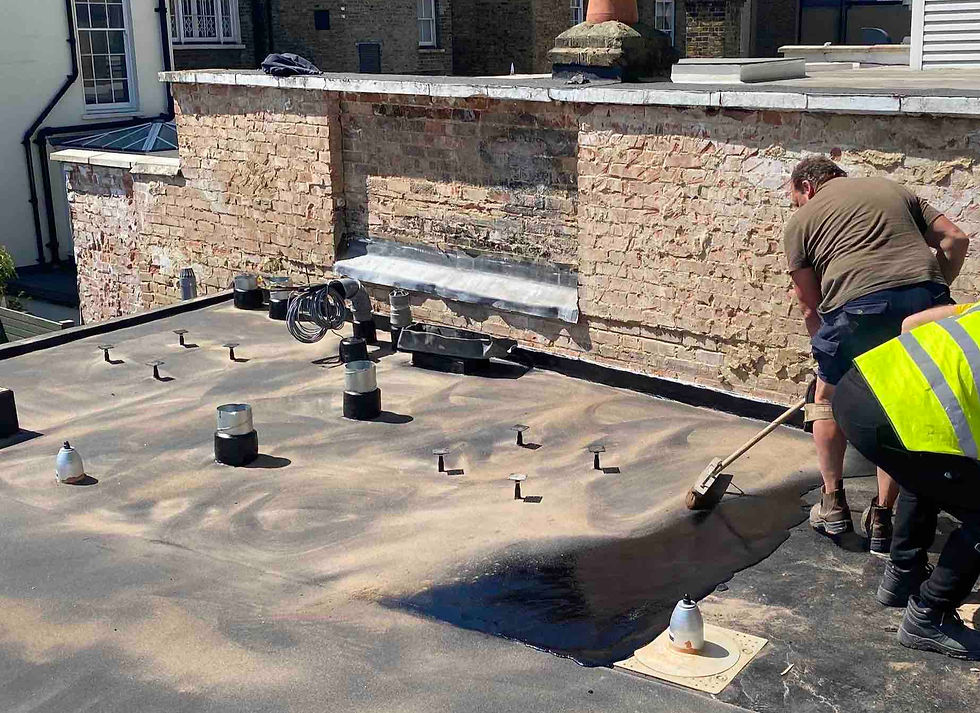
Step-by-step: Replacing Asphalt Roof Flashing
Replacing flashing is not always a DIY job, especially on London’s tall or complex roofs. But understanding the process helps you ask the right questions if hiring a roofer.
1. Preparation
Clear the area of debris and old flashing.
Dry the surface thoroughly.
Check for rot or damage to the underlying roof structure.
2. Cutting The Flashing
Measure the joint or area to be covered.
Cut the asphalt flashing to size, allowing extra for overlaps.
3. Application
Peel off the backing (for self-adhesive types).
Press the flashing firmly into place, moulding it to corners and edges.
Use a roller for strong adhesion.
4. Sealing And Finishing
Overlap pieces by at least 75mm.
Seal edges with roofing mastic or bitumen paint.
Replace roof tiles or slates over the flashing, ensuring water runs over (not under) the flashing.
Pro tip: Flashing should extend at least 150mm up adjoining walls for reliable protection. Many leaks happen because flashing is cut too short.
Common Mistakes When Installing Asphalt Flashing
Even good materials can fail if installed incorrectly. Here are mistakes often seen in London homes:
Insufficient overlap: Water can creep between pieces if overlaps are too small.
Poor adhesion: Surfaces must be clean and dry. Dust, moss, or wetness prevent proper sticking.
Improper placement: Flashing must sit under roof tiles or slates, not on top.
Ignoring expansion: Buildings move. Flashing must be flexible and not nailed tightly.
Mixing materials: Combining metal and asphalt can cause premature wear due to chemical reactions.
Non-obvious insight: In older London homes, historic repairs sometimes used cement or tar as a quick fix. These often crack and fail, letting water in behind the flashing.
When Is Asphalt Flashing The Best Choice?
Asphalt flashing is ideal for:
Complex roof shapes: Its flexibility handles awkward corners and curves.
Flat roofs: Common in London’s extensions and some terraces.
Quick repairs: Self-adhesive types are fast to install.
Budget-conscious homeowners: Asphalt is cheaper than lead or copper.
However, it may not be the best choice for:
Heritage or listed buildings: Lead is usually required for authenticity and longevity.
Areas with high UV exposure: Asphalt can degrade under constant sun, though London’s cloud cover helps.
Very long-term durability: Lead or copper lasts much longer.
How Long Does Asphalt Flashing Last?
Typical lifespan for asphalt flashing in London is 15 to 20 years. Factors that affect its life include:
Quality of installation
Exposure to sun and weather
Roof pitch (steep roofs shed water better)
Maintenance
Comparison:
Flashing Type | Expected Lifespan | Maintenance Needs |
Asphalt | 10-20 years | Annual inspection, reseal if needed |
Lead | 50+ years | Minimal, check for theft/vandalism |
Plastic | 5-10 years | Frequent replacement |
Cost of Asphalt Roof Flashing In London
Costs vary by size and complexity. On average:
Materials: £20–£50 for a roll (enough for most small repairs)
Labour: £100–£300 for small jobs, higher for complex roofs or if scaffolding is needed
For a typical London terrace, replacing flashing around a chimney might cost £250–£500. Lead would be at least double that, but last much longer.
Money-saving tip: Some government grants or insurance policies may cover repairs if water ingress is due to storm damage—check your policy details.
Maintenance Tips For Asphalt Flashing
Regular care extends the life of flashing and prevents leaks:
Annual inspection: Especially after winter or storms.
Clear debris: Remove leaves, moss, and dirt from flashing areas.
Check for lifting edges: Re-seal with roofing mastic if needed.
Look for cracks: Small splits can be patched with bitumen compound.
Non-obvious insight: Many leaks blamed on “old roofs” are actually due to blocked gutters or failed flashing. Cleaning and simple repairs often solve the problem.
How Climate Change Is Affecting London Roofs
London’s weather is changing, with heavier rain and more intense storms becoming common. This puts extra pressure on roofs and flashing. Key challenges:
Sudden downpours: Overwhelm old or poorly maintained flashing.
More freeze-thaw cycles: Increase cracks in roof materials.
Extended wet periods: Make small leaks grow faster into big problems.
Action for homeowners: Upgrade flashing during roof repairs or renovations, not just when a leak appears. Modern asphalt flashing is more durable and flexible than old types.
Choosing A Roofing Contractor In London
Not all roofers are equal. To ensure a proper flashing job:
Check qualifications: Look for membership in bodies like the National Federation of Roofing Contractors (NFRC). Reputable companies such as Elite Asphalt Services take industry standards seriously and follow best practices for flashing installation.
Ask for references: Get feedback from other London homeowners. Trusted contractors like Elite Asphalt Services are always happy to share examples of previous work.
Get a written quote: Ensure it covers materials, labour, and guarantees. A professional company will provide a clear, detailed quotation with no hidden costs.
Specify materials: Ask for the brand and type of asphalt flashing being used so you know exactly what’s protecting your roof.
Warranty: Good installers offer at least a 10-year guarantee on flashing work — something established specialists like Elite Asphalt Services stand behind for long-term peace of mind.
Red flag: Beware of “doorstep roofers” offering cheap repairs after storms. Poorly installed flashing often fails within a year and can lead to more costly damage later.
Case Study: Victorian Terrace In Hackney
A homeowner in Hackney noticed damp patches on the bedroom ceiling after every rain. Inspection revealed cracked asphalt flashing around the base of a chimney. The roofer replaced the old flashing with new, self-adhesive asphalt, extending the material 200mm up the chimney and overlapping tiles.
The cost was £350. No more leaks occurred, and the room stayed dry even during the next year’s storms.
Lesson: Addressing flashing early prevented further damage to plaster and timber, saving money in the long run.
Environmental Concerns And Recycling
Asphalt is a petroleum product, raising questions about sustainability. However, modern manufacturing uses recycled materials, and old asphalt flashing can often be recycled. If environmental impact is a concern:
Ask your roofer about recycling options
Consider lead or copper for very long-term installations (though these have their own impacts)
When To Call A Professional
DIY repairs are tempting, especially with self-adhesive flashing. However, you should call a professional if:
The roof is high or steep (risk of falls)
The leak source is unclear
The building is listed or in a conservation area
Previous repairs have failed
A good roofer can diagnose hidden problems and use the right materials for your specific roof.
Reach out to our team for support or inquiries about Can Asphalt Roof Flashing Stop Water Ingress into London Homes?

Water ingress is something no London homeowner wants to deal with, but the good news is it can be prevented. Asphalt roof flashing is a strong and flexible way to stop leaks, especially with London’s changing weather and mix of old and new homes.
By knowing where flashing is used and spotting small problems early, you can keep your home dry and comfortable all year. A simple check at the right time can save you from costly repairs later.
If you notice signs of a leak or want peace of mind, Elite Asphalt Services is here to help. Our friendly London team can inspect, repair, and protect your roof properly. Get in touch today and keep your home safe and dry.
All You Need to Know
How Often Should I Replace Asphalt Flashing In London?
Asphalt flashing typically lasts 10 to 20 years. Inspect it annually, and replace if you see cracks, lifting edges, or leaks. London’s weather means flashing may wear faster than in drier areas.
Is Asphalt Flashing Suitable For All Roof Types In London?
Asphalt flashing works well for most roof types, especially flat roofs and complex shapes. However, for listed or heritage buildings, lead is usually required by conservation rules.
Can I Install Asphalt Flashing Myself?
DIY installation is possible for small, accessible areas. However, for chimneys, steep roofs, or where leaks are hard to find, professional installation is safer and more reliable.
What Is The Main Cause Of Flashing Failure?
The most common causes are poor installation, ageing, and weather damage. In London, sudden heavy rain and freeze-thaw cycles are major factors. Regular maintenance helps prevent failure.
Does Home Insurance Cover Water Ingress Due To Flashing Failure?
Some policies cover storm damage or sudden water ingress, but wear and tear is usually not included. Check your policy or speak to your insurer for details.


This is such a fantastic breakdown of asphalt roof flashing and its role in protecting London homes. The quality of your writing truly shines through, and I was particularly impressed by the real-world accuracy of the information you presented. It’s not often you find content that feels so grounded and genuinely helpful https://www.scamwatch.gov.au/ I've found that my own interest in asphalt roof maintenance has surprisingly led to some meaningful connections with neighbors, sharing tips and experiences. It’s a shared responsibility, after all! You've really highlighted how crucial patience is in this process; rushing any repair or assessment can lead to bigger problems down the line. This is exactly the kind of insightful content I love to bookmark and revisit.
This post really resonated with me; I totally agree with everything you've laid out about asphalt roof maintenance and its importance in preventing water damage. What also caught my attention was the idea of how age specifically impacts asphalt roofs, which is a dimension I hadn't fully considered before. It makes sense that older materials might behave differently https://www.counsellingonline.org.au/ Furthermore, your points on the practical aspects are invaluable. Navigating the world of home repair often involves conflicting advice, so finding something genuinely actionable like this is a breath of fresh air. Honestly, I’ve already sent this to my partner because it's so clear and helpful. Something else worth mentioning is that my own experience with keeping my roof in good…
This is such a thorough breakdown of asphalt roof flashing! You’ve hit the perfect level of detail, making it incredibly understandable without being overwhelming. It's honestly the kind of explanation I wish I'd had when I first started dealing with home maintenance https://ndh.org.au/ I remember one particularly rainy season where a small leak seemed to materialize out of nowhere, causing quite a bit of stress, and having this kind of clear information would have been invaluable then. You've managed to be both bold in your assertions and remarkably accurate about how asphalt roof systems function. I'll definitely be linking back to this write-up for anyone else struggling with similar issues. Seriously, thank you for creating such a genuinely useful resource…